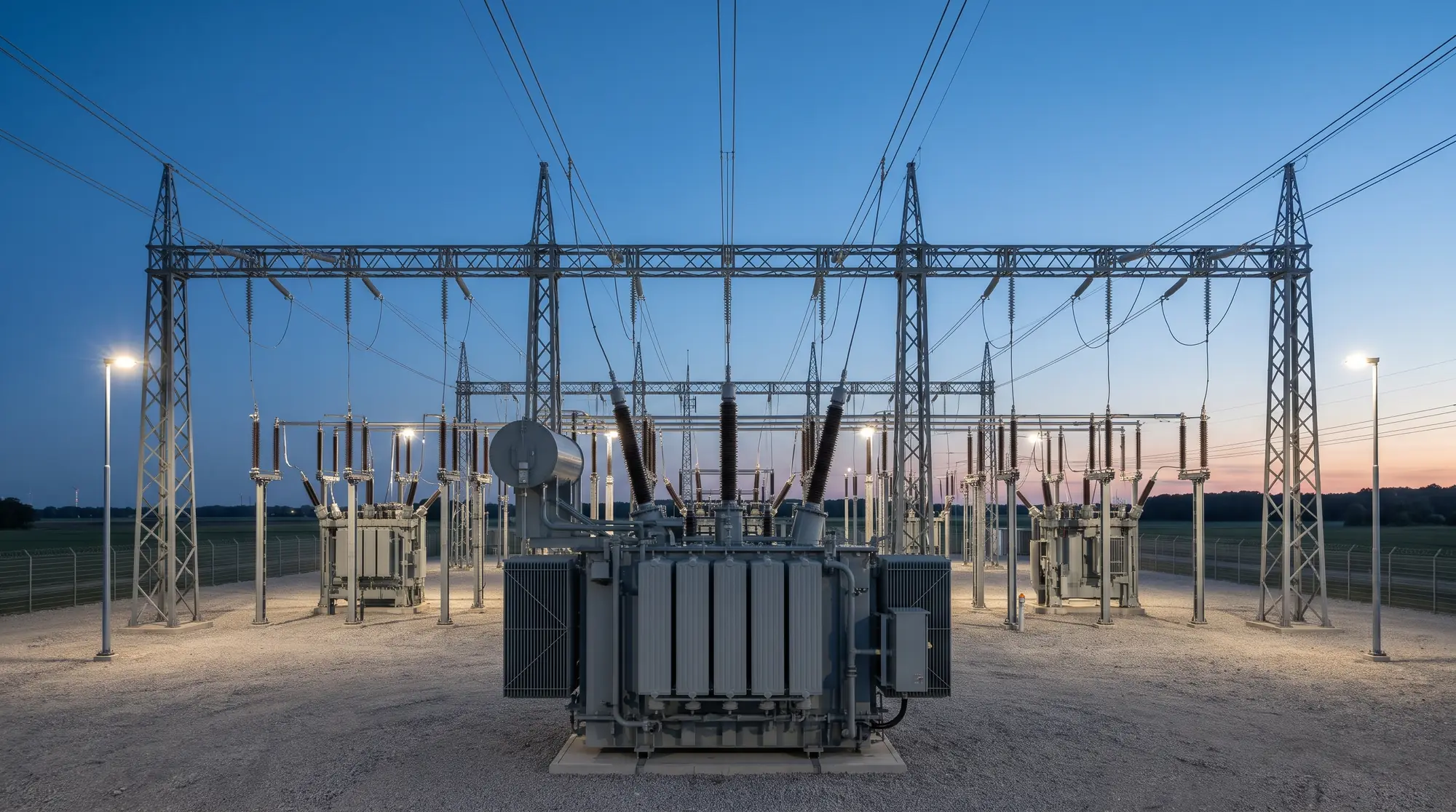
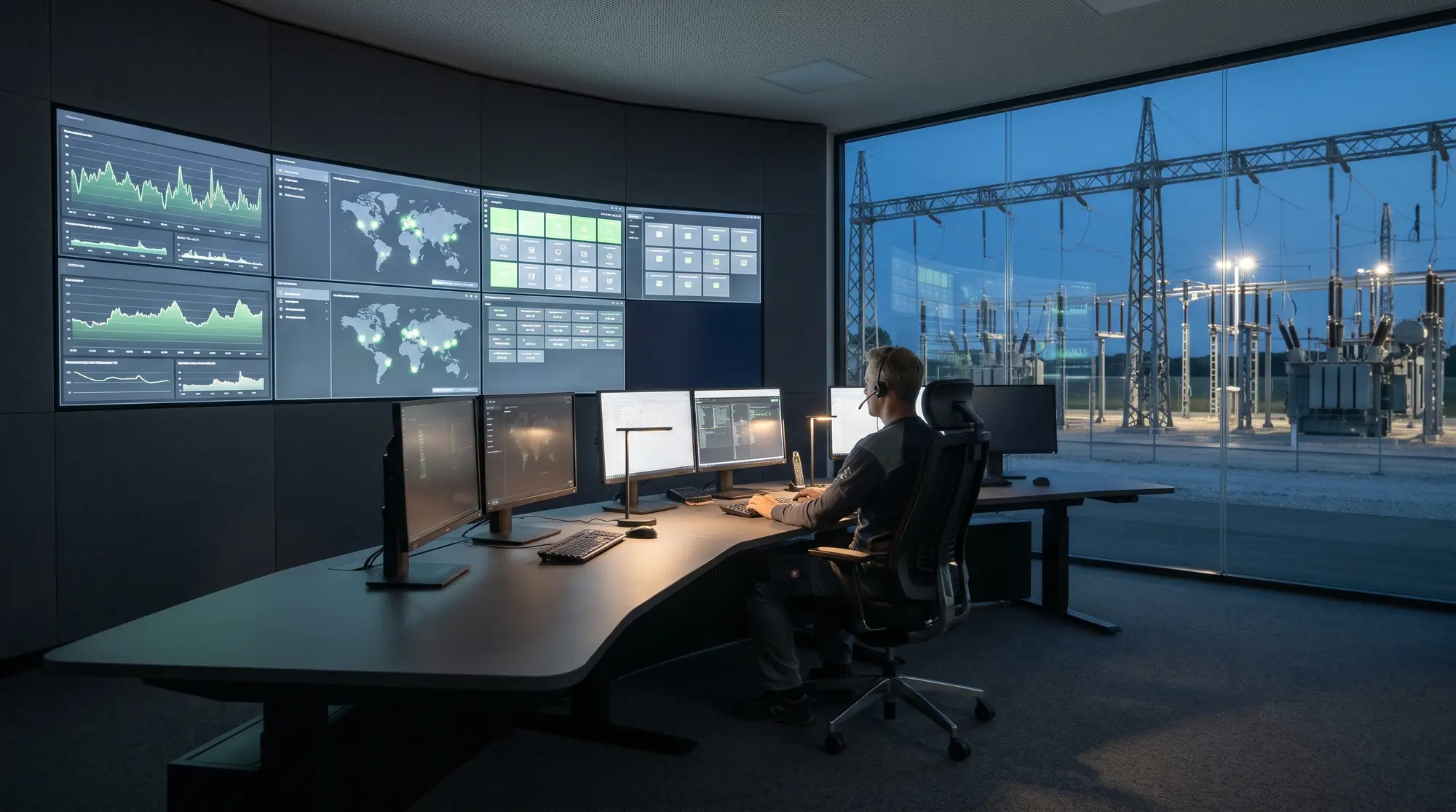
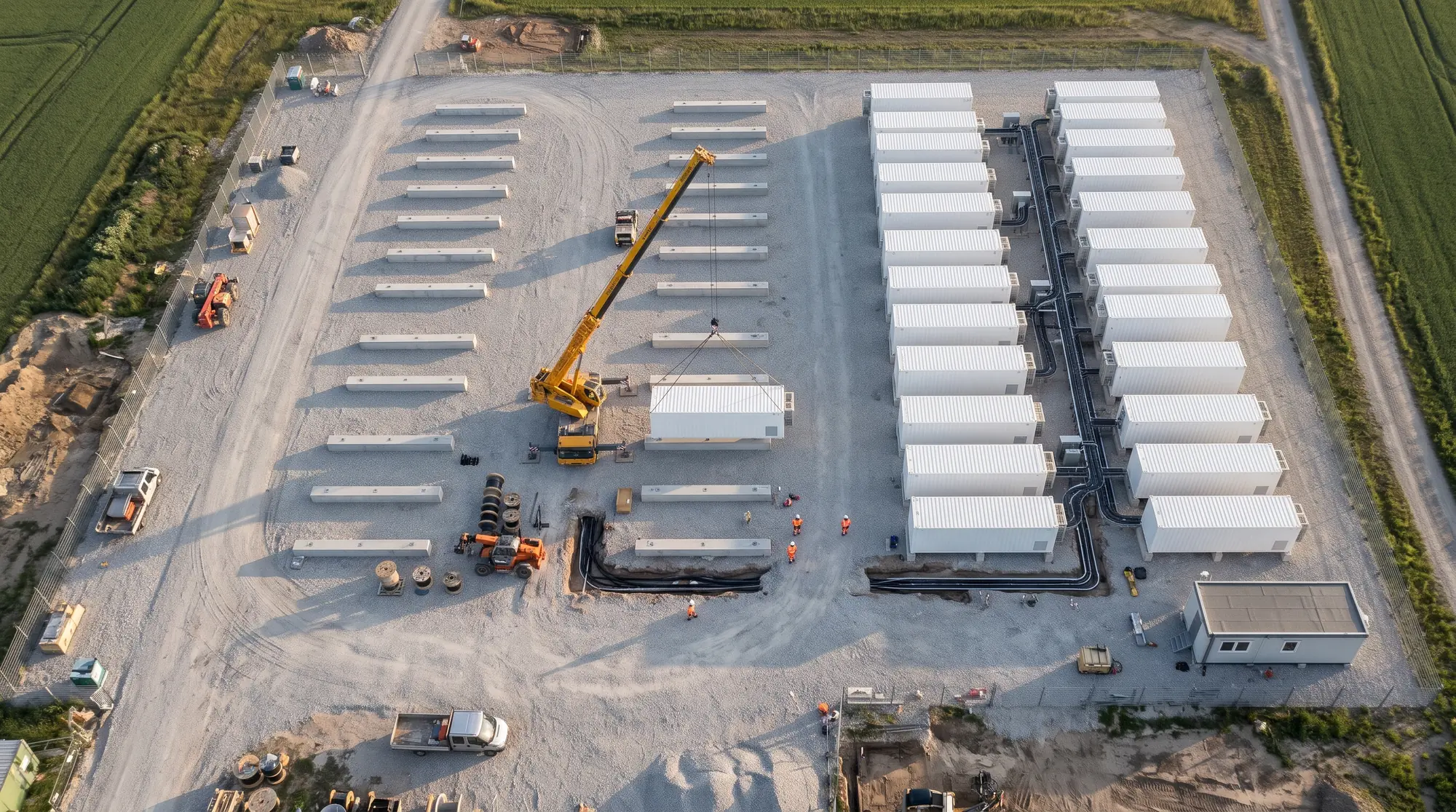
 FeaturedEPC and project delivery under one accountable contract.
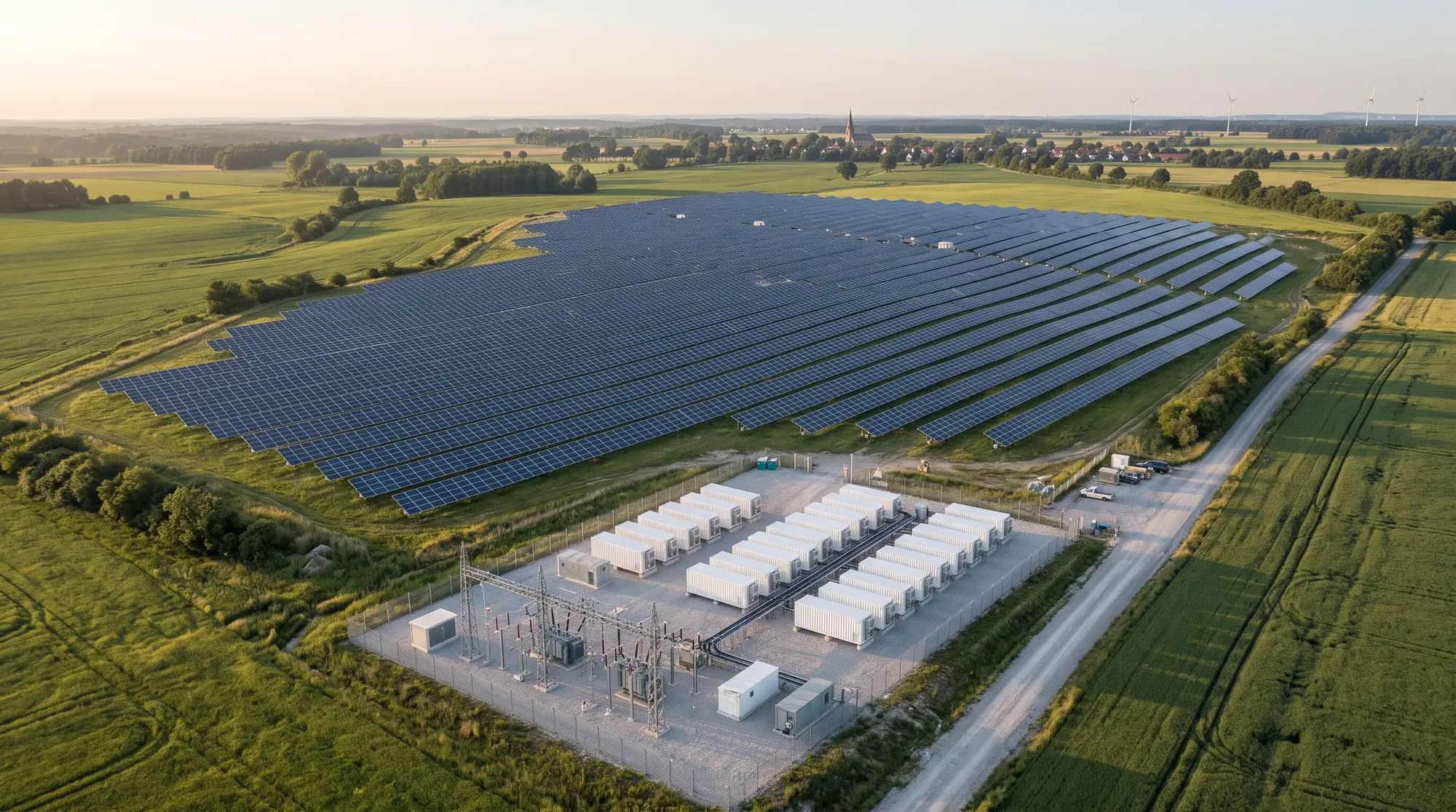
A battery energy storage system - usually shortened to BESS - stores electricity when it is plentiful or cheap and releases it when the grid, a site or a market needs it. This guide explains how a BESS project is put together, the decisions that shape its value, and where projects most often go wrong.
What a battery energy storage system is
A BESS is more than batteries. A complete system combines battery modules arranged in racks, a battery management system that protects every cell, power conversion equipment that turns the battery's direct current into alternating current for the grid, transformers and switchgear, an energy management system that decides when to charge and discharge, and the fire, thermal and safety systems that keep it within safe limits.
Most systems built today use lithium iron phosphate (LFP) cells, typically delivered in containerised units that are installed on a prepared site and connected together. The containerised format makes systems faster to build and easier to scale, but every container still has to work with the controls, the grid connection and the operating strategy around it.
Grid-scale, utility-scale and commercial storage
The same building blocks serve very different projects:
- Grid-scale and utility-scale battery storage. Large systems connected to the transmission or distribution network, earning revenue from energy markets and grid services.
- Co-located storage. Batteries added to solar or wind sites, so the plant can shift its output and make better use of its grid connection.
- Commercial and industrial battery storage. Systems on or near a business site, used to manage energy costs, support on-site generation and protect supply.
Each type has different grid requirements, revenue models and operating needs, which is why the project type should be settled before equipment is chosen.
The stages of a BESS project
Every battery storage project passes through the same chain. Strategy and feasibility set the business case. Regulatory and grid work defines what the system must comply with before it can connect. Engineering turns the requirements into a design, and procurement buys equipment to that design. Construction and commissioning deliver the asset, and system integration makes the batteries, power electronics, controls and grid connection work as one. Once the system is running, optimisation, trading and operations and maintenance decide how much value it delivers over its life.
Decisions made at feasibility shape what the asset can earn for the next fifteen years or more.
What an EPC contract covers for battery storage
Under an EPC - engineering, procurement and construction - contract, one contractor takes responsibility for designing the system, buying the equipment, building the site and supporting commissioning. For a BESS project this typically includes detailed electrical and civil design, supplier selection and contracts, logistics, installation of containers and power equipment, the medium- or high-voltage connection works, and testing before energisation.
The value of an EPC partner lies in owning the interfaces: between battery and inverter suppliers, between the control system and the grid operator's requirements, and between the construction team and whoever will operate the asset. Lenders and investors also prefer a clear allocation of delivery risk.
Compliance, grid connection and cybersecurity
A battery storage system cannot earn until it is connected and compliant. Requirements vary by country and network operator, and typically cover grid code compliance, equipment certification, fire and safety standards and, increasingly, cybersecurity. In the EU, NIS2 can apply to the organisations that operate energy assets, and the Cyber Resilience Act applies to products with digital elements such as inverters and control systems. Building these requirements into the design and procurement avoids redesign later.
Running the asset: optimisation, trading and O&M
Once a BESS is operating, its value depends on how it is used and how well it is looked after. Optimisation and energy management decide when the system charges and discharges, within its technical limits. Trading gives it access to the markets where it earns. Operations and maintenance protect availability through preventive and corrective work, monitoring, warranty management and a clear first response when something goes wrong.
Questions to ask before you start
- What is the project type, and which revenue streams or savings is it built for?
- Which grid, safety and cybersecurity requirements apply at this site?
- Who is accountable for the interfaces between suppliers, contractors and operators?
- How will performance be measured and reported against the business case?
- Who will operate and maintain the system, and under what contract?
If you are planning a battery energy storage project, or want a second view on one already in development, talk to Parenergy. We can take on the full value chain or the stages you need, from regulatory and grid compliance and BESS EPC to operations and maintenance.